



At Washington Psychological Wellness, a psychotherapy center in Gaithersburg, MD, we get asked the question all the time. What are the best books for child depression? Well, we asked our mental health clinicians and put together this list of recommended readings!
Want more recommended mental health book options? Check out our Books We Love section to discover a list of hand-picked resources!

The Energy Bus for Kids
Best Books For Child Depression
Summary
An illustrated adaptation of the bestselling business fable, The Energy Bus, teaches children the benefits of staying positive
In this illustrated adaptation of the bestselling fable, The Energy Bus, author Jon Gordon shows children how to overcome negativity, bullies and everyday challenges to be their best. The Energy Bus For Kids is a story that will teach kids how to find their inner motivation and pass on that positive energy to others.
- The Energy Bus For Kids presents five rules for the “Ride of Your Life”
- Teaches kids how to fuel your ride with positive energy
- Shares with kids how to love the people you share your journey with and how to enjoy the ride
Positive kids become positive adults. So get kids on the Energy Bus and infuse their lives with a newfound vision, attitude, and positivity.
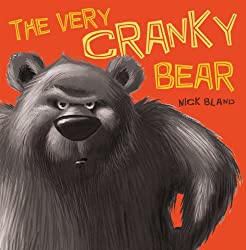
The Very Cranky Bear
By Nick Bland
Best Books For Child Depression
Summary
Four animal friends cheer up a very cranky bear.
Nick Bland’s expressive, adorable illustrations complement delightful, rhyming, read-aloud text in this lesson about the importance of sharing with others. Moose, Lion, Zebra, and Sheep take shelter in a cave on a cold and rainy day, only to realize that a bear is there. The bear roars loudly and says that he is trying to sleep. Not understanding why the bear is so cranky, the other animals come up with ways to cheer up the bear. Moose finds antlers for him, Lion gives him a mane, and Zebra paints on stripes. Is there anything the four well-meaning friends can do to help the bear sleep?
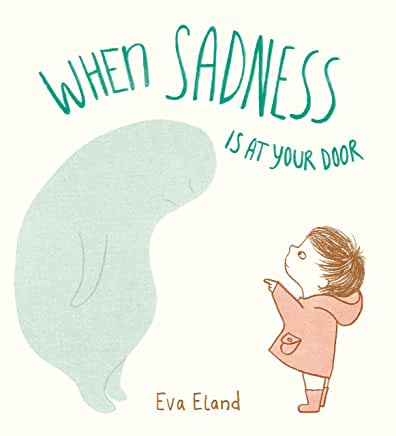
When Sadness Is At Your Door
Best Books For Child Depression
Summary
A comforting primer in emotional literacy and mindfulness that suggests we approach the feeling of sadness as if it is our guest.
Sadness can be scary and confusing at any age! When we feel sad, especially for long periods of time, it can seem as if the sadness is a part of who we are–an overwhelming, invisible, and scary sensation.
In When Sadness Is at Your Door, Eva Eland brilliantly approaches this feeling as if it is a visitor. She gives it a shape and a face, and encourages the reader to give it a name, all of which helps to demystify it and distinguish it from ourselves. She suggests activities to do with it, like sitting quietly, drawing, and going outside for a walk. The beauty of this approach is in the respect the book has for the feeling, and the absence of a narrative that encourages the reader to “get over” it or indicates that it’s “bad,” both of which are anxiety-producing notions.
Simple illustrations that recall the classic style of Crockett Johnson (Harold and the Purple Crayon) invite readers to add their own impressions.
Eva Eland’s debut picture book is a great primer in mindfulness and emotional literacy, perfect for kids navigating these new feelings–and for adult readers tackling the feelings themselves!
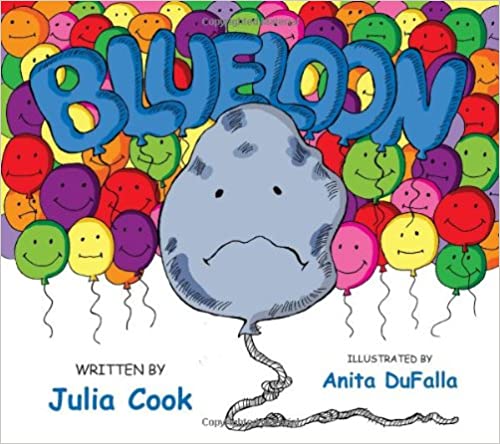
Blueloon
Best Books For Child Depression
Summary
I’m a blueloon. I’m supposed to be a regular balloon,
but I’m just not having fun like the others.
I’m kinda dull, and I’m kinda flat.
My string is tied up in knots.
I have a case of the blues…that’s why I’m a blueloon.
I’ve felt like this for weeks!
Meet Blueloon a sad little balloon who is suffering from depression. With help from the wise rock, Blueloon learns what he can do to “bounce back” to being the way he used to be bright, round, and full with a very straight string!
Although clinical depression is often thought of as an adult disease, it can affect children, as well. Unfortunately, children may not have the maturity to understand what is happening to them, or they may feel powerless to change their situation, so they don’t speak up about what they are going through. It is up to adults to be on the lookout for signs of trouble, and recognize when a child needs help.
Finally! A book on depression that works for Blueloons of all ages!