
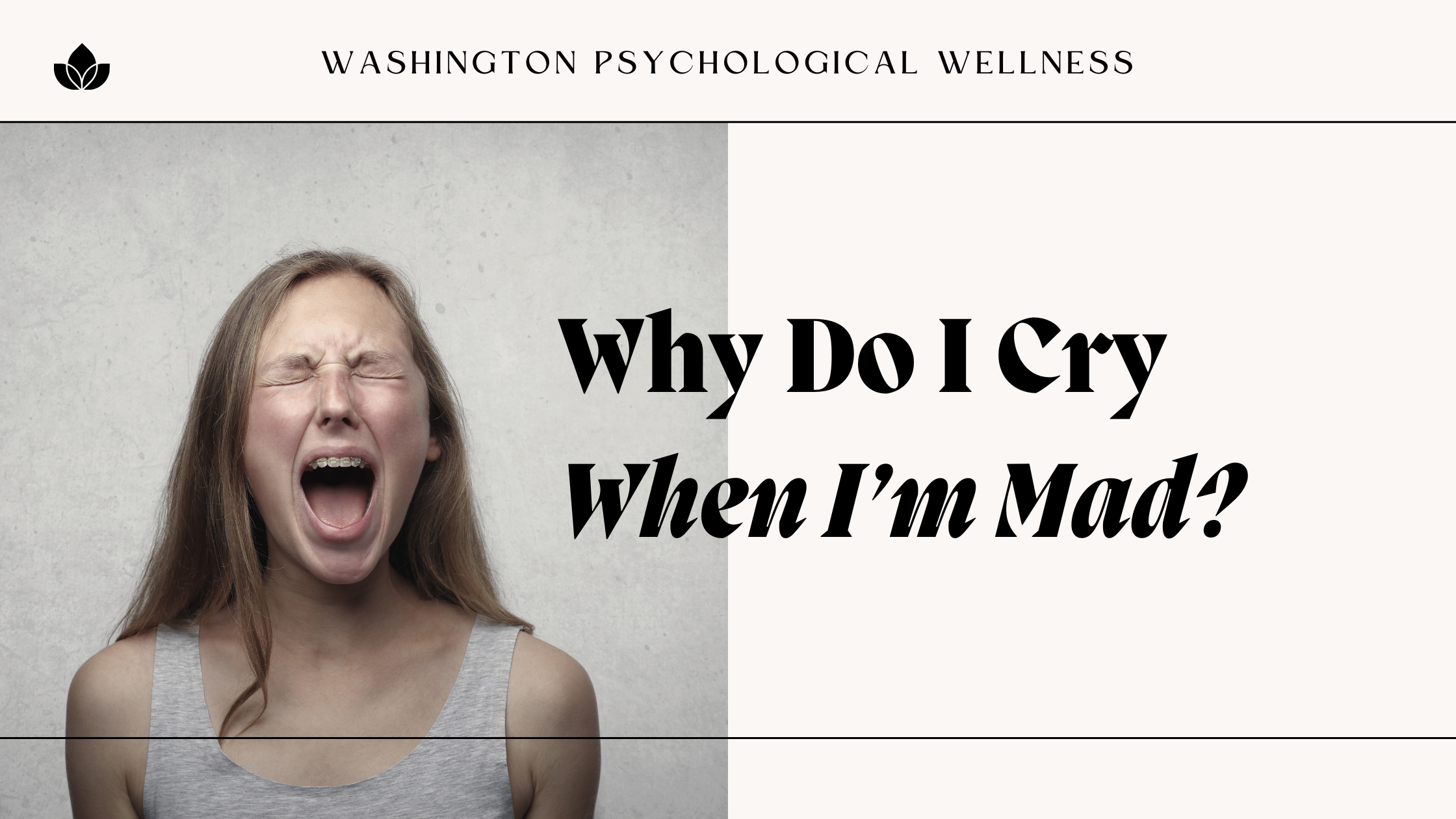
u003ch1u003eu003cstrongu003eWhy Do I Cry When I Get Mad? Understanding the Emotional Responseu003c/strongu003eu003c/h1u003enu003cpu003eu003cspan data-contrast=u0022autou0022 xml:lang=u0022EN-USu0022 lang=u0022EN-USu0022 class=u0022TextRun SCXW160392217 BCX0u0022u003eu003cspan class=u0022NormalTextRun SCXW160392217 BCX0u0022u003eHave you ever found yourself in u003c/spanu003eu003cspan class=u0022NormalTextRun SCXW160392217 BCX0u0022u003ea heated argumentu003c/spanu003eu003cspan class=u0022NormalTextRun SCXW160392217 BCX0u0022u003e or an intensely frustrating situation, only to feel your eyes welling up with tears? u003c/spanu003eu003cspan class=u0022NormalTextRun SCXW160392217 BCX0u0022u003eIt'su003c/spanu003eu003cspan class=u0022NormalTextRun SCXW160392217 BCX0u0022u003e a common experience, but one that can leave you feeling confused and embarrassed. Why do we cry when we get mad? At Washington Psychological Wellness, u003c/spanu003eu003cspan class=u0022NormalTextRun SCXW160392217 BCX0u0022u003ewe'reu003c/spanu003eu003cspan class=u0022NormalTextRun SCXW160392217 BCX0u0022u003e here to help you understand this emotional response and provide insights into managing your reactions.u003c/spanu003eu003c/spanu003eu003cspan class=u0022EOP SCXW160392217 BCX0u0022 data-ccp-props=u0022{u0026quot;134233117u0026quot;:true,u0026quot;134233118u0026quot;:true}u0022u003e u003c/spanu003eu003c/pu003e
u003ch2u003eu003cstrongu003eThe Science Behind Tearsu003c/strongu003eu003c/h2u003enu003cpu003eu003cstrongu003eu003c/strongu003eu003c/pu003enu003ch3u003eu003cstrongu003eu003cspan data-contrast=u0022autou0022 xml:lang=u0022EN-USu0022 lang=u0022EN-USu0022 class=u0022TextRun MacChromeBold SCXW35395159 BCX0u0022u003eu003cspan class=u0022NormalTextRun SCXW35395159 BCX0u0022u003eThe Physiology of Cryingu003c/spanu003eu003c/spanu003eu003cspan class=u0022EOP SCXW35395159 BCX0u0022 data-ccp-props=u0022{u0026quot;134233117u0026quot;:true,u0026quot;134233118u0026quot;:true}u0022u003e u003c/spanu003eu003c/strongu003eu003c/h3u003enu003cpu003eu003cspan data-contrast=u0022autou0022u003eCrying is a natural response to a range of emotions, including sadness, happiness, and anger. When we cry, our bodies release tears from the lacrimal glands located just above the outer corner of each eye. Tears can serve several purposes, such as lubricating the eyes, removing irritants, and expressing emotional states.u003c/spanu003eu003cspan data-ccp-props=u0022{u0026quot;134233117u0026quot;:true,u0026quot;134233118u0026quot;:true}u0022u003e u003c/spanu003eu003c/pu003enu003ch3u003eu003cbu003eu003cspan data-contrast=u0022autou0022u003eTypes of Tearsu003c/spanu003eu003c/bu003eu003cspan data-ccp-props=u0022{u0026quot;134233117u0026quot;:true,u0026quot;134233118u0026quot;:true}u0022u003e u003c/spanu003eu003c/h3u003enu003cpu003eu003cspan data-contrast=u0022autou0022u003eNot all tears are the same. There are three types of tears:u003c/spanu003eu003cspan data-ccp-props=u0022{u0026quot;134233117u0026quot;:true,u0026quot;134233118u0026quot;:true}u0022u003e u003c/spanu003eu003c/pu003enu003colu003enu003cli data-leveltext=u0022%1.u0022 data-font=u0022Times New Romanu0022 data-listid=u00221u0022 data-list-defn-props=u0022{u0026quot;335552541u0026quot;:0,u0026quot;335559685u0026quot;:720,u0026quot;335559991u0026quot;:360,u0026quot;469769242u0026quot;:[65533,0],u0026quot;469777803u0026quot;:u0026quot;leftu0026quot;,u0026quot;469777804u0026quot;:u0026quot;%1.u0026quot;,u0026quot;469777815u0026quot;:u0026quot;multilevelu0026quot;}u0022 aria-setsize=u0022-1u0022 data-aria-posinset=u00221u0022 data-aria-level=u00221u0022u003eu003cbu003eu003cspan data-contrast=u0022autou0022u003eBasal Tears:u003c/spanu003eu003c/bu003eu003cspan data-contrast=u0022autou0022u003e These keep our eyes moist and protect them from dust and debris.u003c/spanu003eu003cspan data-ccp-props=u0022{u0026quot;134233117u0026quot;:true,u0026quot;134233118u0026quot;:true}u0022u003e u003c/spanu003eu003c/liu003enu003c/olu003enu003colu003enu003cli data-leveltext=u0022%1.u0022 data-font=u0022Times New Romanu0022 data-listid=u00221u0022 data-list-defn-props=u0022{u0026quot;335552541u0026quot;:0,u0026quot;335559685u0026quot;:720,u0026quot;335559991u0026quot;:360,u0026quot;469769242u0026quot;:[65533,0],u0026quot;469777803u0026quot;:u0026quot;leftu0026quot;,u0026quot;469777804u0026quot;:u0026quot;%1.u0026quot;,u0026quot;469777815u0026quot;:u0026quot;multilevelu0026quot;}u0022 aria-setsize=u0022-1u0022 data-aria-posinset=u00222u0022 data-aria-level=u00221u0022u003eu003cbu003eu003cspan data-contrast=u0022autou0022u003eReflex Tears:u003c/spanu003eu003c/bu003eu003cspan data-contrast=u0022autou0022u003e These are produced in response to irritants like smoke or onions.u003c/spanu003eu003cspan data-ccp-props=u0022{u0026quot;134233117u0026quot;:true,u0026quot;134233118u0026quot;:true}u0022u003e u003c/spanu003eu003c/liu003enu003c/olu003enu003colu003enu003cli data-leveltext=u0022%1.u0022 data-font=u0022Times New Romanu0022 data-listid=u00221u0022 data-list-defn-props=u0022{u0026quot;335552541u0026quot;:0,u0026quot;335559685u0026quot;:720,u0026quot;335559991u0026quot;:360,u0026quot;469769242u0026quot;:[65533,0],u0026quot;469777803u0026quot;:u0026quot;leftu0026quot;,u0026quot;469777804u0026quot;:u0026quot;%1.u0026quot;,u0026quot;469777815u0026quot;:u0026quot;multilevelu0026quot;}u0022 aria-setsize=u0022-1u0022 data-aria-posinset=u00223u0022 data-aria-level=u00221u0022u003eu003cbu003eu003cspan data-contrast=u0022autou0022u003eEmotional Tears:u003c/spanu003eu003c/bu003eu003cspan data-contrast=u0022autou0022u003e These tears are triggered by a range of emotions, including anger.u003c/spanu003eu003cspan data-ccp-props=u0022{u0026quot;134233117u0026quot;:true,u0026quot;134233118u0026quot;:true}u0022u003e u003c/spanu003eu003c/liu003enu003c/olu003e
u003ch2u003eu003cbu003eu003cspan data-contrast=u0022autou0022u003eEmotional Tears and Angeru003c/spanu003eu003c/bu003eu003cspan data-ccp-props=u0022{u0026quot;134233117u0026quot;:true,u0026quot;134233118u0026quot;:true}u0022u003e u003c/spanu003eu003c/h2u003enu003cpu003eu003cspan data-ccp-props=u0022{u0026quot;134233117u0026quot;:true,u0026quot;134233118u0026quot;:true}u0022u003eu003c/spanu003eu003c/pu003enu003ch3u003eu003cbu003eu003cspan data-contrast=u0022autou0022u003eThe Connection Between Anger and Cryingu003c/spanu003eu003c/bu003eu003cspan data-ccp-props=u0022{u0026quot;134233117u0026quot;:true,u0026quot;134233118u0026quot;:true}u0022u003e u003c/spanu003eu003c/h3u003enu003cpu003eu003cspan data-contrast=u0022autou0022u003eCrying when you're angry might seem counterintuitive, but there's a solid physiological and psychological basis for this reaction. When you experience intense emotions, your body's stress response is activated. This response is regulated by the autonomic nervous system, which controls bodily functions like heart rate and blood pressure.u003c/spanu003eu003cspan data-ccp-props=u0022{u0026quot;134233117u0026quot;:true,u0026quot;134233118u0026quot;:true}u0022u003e u003c/spanu003eu003c/pu003enu003ch3u003eu003cbu003eu003cspan data-contrast=u0022autou0022u003eThe Role of the Amygdalau003c/spanu003eu003c/bu003eu003cspan data-ccp-props=u0022{u0026quot;134233117u0026quot;:true,u0026quot;134233118u0026quot;:true}u0022u003e u003c/spanu003eu003c/h3u003enu003cpu003eu003cspan data-contrast=u0022autou0022u003eThe amygdala, a small almond-shaped structure in the brain, plays a key role in processing emotions. When you get angry, the amygdala sends signals to the hypothalamus, initiating the body's fight-or-flight response. This response can lead to increased heart rate, muscle tension, and the release of stress hormones like cortisol.u003c/spanu003eu003cspan data-ccp-props=u0022{u0026quot;134233117u0026quot;:true,u0026quot;134233118u0026quot;:true}u0022u003e u003c/spanu003eu003c/pu003enu003cpu003eu003cspan data-contrast=u0022autou0022u003eIn some people, this intense emotional arousal also triggers the production of tears. Crying can serve as a physical release, helping to reduce stress and restore emotional equilibrium.u003c/spanu003eu003cspan data-ccp-props=u0022{u0026quot;134233117u0026quot;:true,u0026quot;134233118u0026quot;:true}u0022u003e u003c/spanu003eu003c/pu003enu003ch3u003eu003cbu003eu003cspan data-contrast=u0022autou0022u003eWhy Do Some People Cry More Easily Than Others?u003c/spanu003eu003c/bu003eu003cspan data-ccp-props=u0022{u0026quot;134233117u0026quot;:true,u0026quot;134233118u0026quot;:true}u0022u003e u003c/spanu003eu003c/h3u003enu003cpu003eu003cspan data-contrast=u0022autou0022u003eEveryone's emotional threshold is different. Factors such as genetics, personality, and past experiences can influence how you respond to anger and other strong emotions. Some people are naturally more sensitive and may cry more easily due to a lower threshold for emotional arousal.u003c/spanu003eu003cspan data-ccp-props=u0022{u0026quot;134233117u0026quot;:true,u0026quot;134233118u0026quot;:true}u0022u003e u003c/spanu003eu003c/pu003e
u003ch2u003eu003cbu003eu003cspan data-contrast=u0022autou0022u003ePsychological Perspectivesu003c/spanu003eu003c/bu003eu003cspan data-ccp-props=u0022{u0026quot;134233117u0026quot;:true,u0026quot;134233118u0026quot;:true}u0022u003e u003c/spanu003eu003c/h2u003enu003cpu003eu003cbu003eu003cspan data-contrast=u0022autou0022u003eu003c/spanu003eu003c/bu003eu003c/pu003enu003ch3u003eu003cbu003eu003cspan data-contrast=u0022autou0022u003eCrying as a Communication Toolu003c/spanu003eu003c/bu003eu003cspan data-ccp-props=u0022{u0026quot;134233117u0026quot;:true,u0026quot;134233118u0026quot;:true}u0022u003e u003c/spanu003eu003c/h3u003enu003cpu003eu003cspan data-contrast=u0022autou0022u003eFrom a psychological standpoint, crying can also serve as a nonverbal form of communication. When you cry during an argument or conflict, it can signal to others that you are feeling overwhelmed or in distress. This can potentially de-escalate the situation by eliciting empathy and support from those around you.u003c/spanu003eu003cspan data-ccp-props=u0022{u0026quot;134233117u0026quot;:true,u0026quot;134233118u0026quot;:true}u0022u003e u003c/spanu003eu003c/pu003enu003ch3u003eu003cbu003eu003cspan data-contrast=u0022autou0022u003eGender Differencesu003c/spanu003eu003c/bu003eu003cspan data-ccp-props=u0022{u0026quot;134233117u0026quot;:true,u0026quot;134233118u0026quot;:true}u0022u003e u003c/spanu003eu003c/h3u003enu003cpu003eu003cspan data-contrast=u0022autou0022u003eResearch has shown that women tend to cry more frequently than men. Social and cultural factors play a role in this difference. Women are often socialized to express their emotions more openly, while men may be encouraged to suppress their feelings. However, it's important to remember that crying is a natural response for everyone, regardless of gender.u003c/spanu003eu003cspan data-ccp-props=u0022{u0026quot;134233117u0026quot;:true,u0026quot;134233118u0026quot;:true}u0022u003e u003c/spanu003eu003c/pu003e
u003ch2u003eu003cbu003eu003cspan data-contrast=u0022autou0022u003eManaging Anger and Tearsu003c/spanu003eu003c/bu003eu003cspan data-ccp-props=u0022{u0026quot;134233117u0026quot;:true,u0026quot;134233118u0026quot;:true}u0022u003e u003c/spanu003eu003c/h2u003enu003ch3u003eu003cbu003eu003cspan data-contrast=u0022autou0022u003eu003c/spanu003eu003c/bu003eu003c/h3u003enu003ch3u003eu003cbu003eu003cspan data-contrast=u0022autou0022u003eRecognize Your Triggersu003c/spanu003eu003c/bu003eu003cspan data-ccp-props=u0022{u0026quot;134233117u0026quot;:true,u0026quot;134233118u0026quot;:true}u0022u003e u003c/spanu003eu003c/h3u003enu003cpu003eu003cspan data-contrast=u0022autou0022u003eUnderstanding what triggers your anger and subsequent tears can help you manage your emotional responses. Keep a journal to track situations that lead to these reactions. Over time, you may notice patterns that can provide insight into your emotional triggers.u003c/spanu003eu003cspan data-ccp-props=u0022{u0026quot;134233117u0026quot;:true,u0026quot;134233118u0026quot;:true}u0022u003e u003c/spanu003eu003c/pu003enu003ch3u003eu003cbu003eu003cspan data-contrast=u0022autou0022u003ePractice Mindfulnessu003c/spanu003eu003c/bu003eu003cspan data-ccp-props=u0022{u0026quot;134233117u0026quot;:true,u0026quot;134233118u0026quot;:true}u0022u003e u003c/spanu003eu003c/h3u003enu003cpu003eu003cspan data-contrast=u0022autou0022u003eMindfulness techniques, such as deep breathing and meditation, can help you stay grounded and manage your emotions more effectively. When you feel anger rising, take a few deep breaths to calm your nervous system. This can help you gain control over your emotional response and reduce the likelihood of crying.u003c/spanu003eu003cspan data-ccp-props=u0022{u0026quot;134233117u0026quot;:true,u0026quot;134233118u0026quot;:true}u0022u003e u003c/spanu003eu003c/pu003enu003ch3u003eu003cbu003eu003cspan data-contrast=u0022autou0022u003eSeek Professional Helpu003c/spanu003eu003c/bu003eu003cspan data-ccp-props=u0022{u0026quot;134233117u0026quot;:true,u0026quot;134233118u0026quot;:true}u0022u003e u003c/spanu003eu003c/h3u003enu003cpu003eu003cspan data-contrast=u0022autou0022u003eIf crying when you're angry is impacting your daily life or relationships, consider seeking professional help. At Washington Psychological Wellness, our experienced therapists can provide you with tools and strategies to manage your emotions more effectively. Therapy can help you explore the underlying causes of your anger and develop healthier coping mechanisms.u003c/spanu003eu003cspan data-ccp-props=u0022{u0026quot;134233117u0026quot;:true,u0026quot;134233118u0026quot;:true}u0022u003e u003c/spanu003eu003c/pu003enu003ch3u003eu003cbu003eu003cspan data-contrast=u0022autou0022u003eEmbrace Self-Compassionu003c/spanu003eu003c/bu003eu003cspan data-ccp-props=u0022{u0026quot;134233117u0026quot;:true,u0026quot;134233118u0026quot;:true}u0022u003e u003c/spanu003eu003c/h3u003enu003cpu003eu003cspan data-contrast=u0022autou0022u003eIt's important to be kind to yourself when you experience strong emotions. Crying is a natural response and doesn't make you weak or overly sensitive. Practice self-compassion by acknowledging your feelings without judgment. Understand that it's okay to feel angry and to express that anger through tears.u003c/spanu003eu003cspan data-ccp-props=u0022{u0026quot;134233117u0026quot;:true,u0026quot;134233118u0026quot;:true}u0022u003e u003c/spanu003eu003c/pu003e
u003ch3u003eu003cbu003eu003cspan data-contrast=u0022autou0022u003eConclusionu003c/spanu003eu003c/bu003eu003cspan data-ccp-props=u0022{u0026quot;134233117u0026quot;:true,u0026quot;134233118u0026quot;:true}u0022u003e u003c/spanu003eu003c/h3u003enu003cpu003eu003cspan data-contrast=u0022autou0022u003eCrying when you're mad is a complex emotional response that involves both physiological and psychological factors. By understanding the science behind this reaction and exploring strategies to manage your emotions, you can gain better control over your responses and improve your emotional well-being.u003c/spanu003eu003cspan data-ccp-props=u0022{u0026quot;134233117u0026quot;:true,u0026quot;134233118u0026quot;:true}u0022u003e u003c/spanu003eu003c/pu003enu003cpu003eu003cspan data-contrast=u0022autou0022u003eAt Washington Psychological Wellness, we're here to support you on your journey to emotional health. If you need help managing your emotions or understanding your reactions, don't hesitate to reach out to us. Together, we can work towards a healthier and more balanced emotional state.u003c/spanu003eu003cspan data-ccp-props=u0022{u0026quot;134233117u0026quot;:true,u0026quot;134233118u0026quot;:true}u0022u003e u003c/spanu003eu003c/pu003e